Fading dark spots: alpha arbutin or vitamin C?
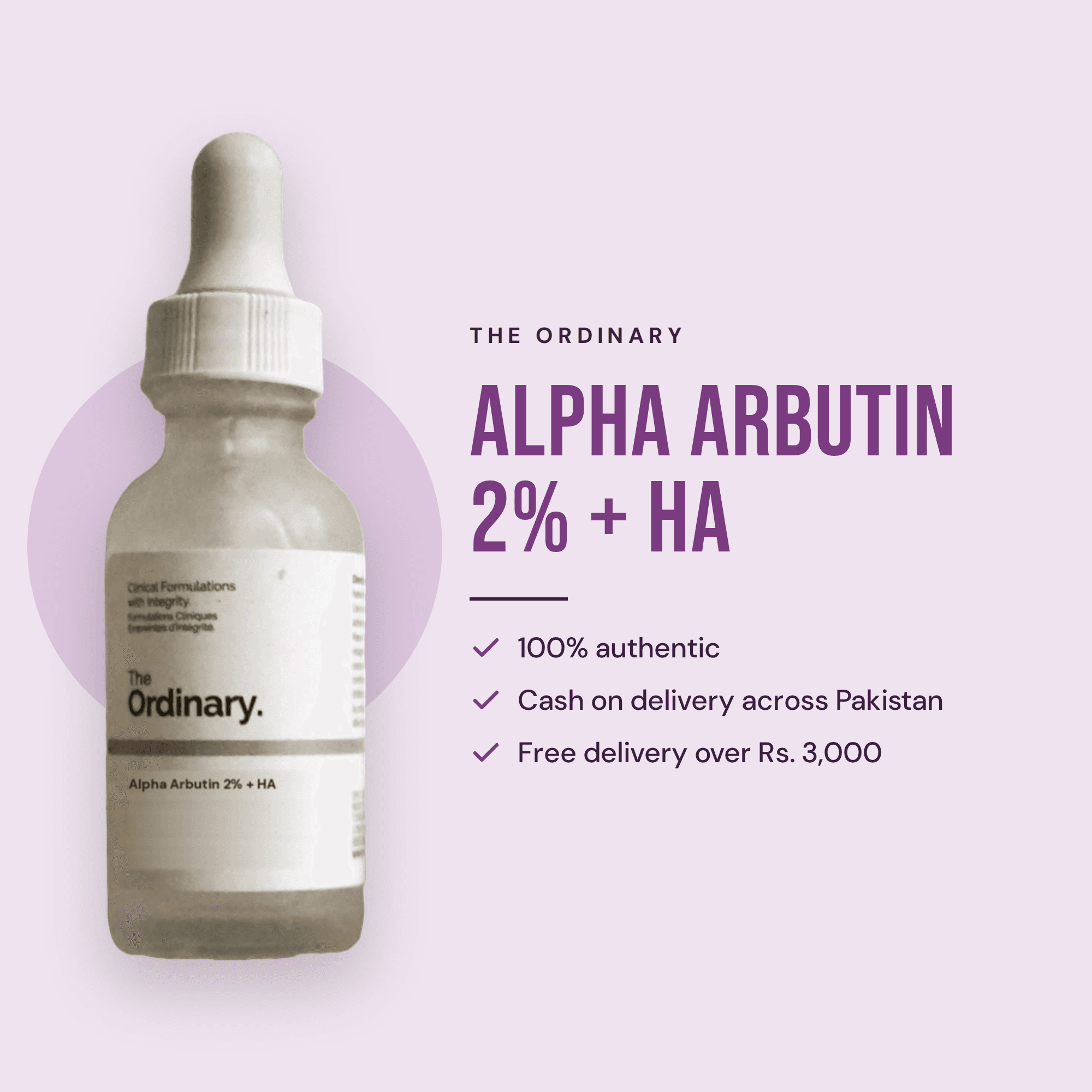
Dark spots, uneven tone and marks left behind after a breakout are among the most common skin concerns in Pakistan. Strong sun most of the year keeps pigmentation active, and the marks can linger for months.
Three of our serums are aimed squarely at this. They are not interchangeable, so here is how to choose.
Alpha Arbutin: the patient specialist
Alpha Arbutin 2% + HA targets the look of dark spots and uneven tone. It is gentle, water-based and comes with hyaluronic acid, so it does not dry skin out.
- Best for: stubborn spots, post-acne marks, sensitive skin.
- Use it: morning and night, before moisturiser.
Vitamin C: brightness for the whole face
Vitamin C brightens overall dullness as well as spots. We carry two, and they suit different skin:
- Ascorbyl Glucoside Solution 12% — a gentle vitamin C derivative in a light, water-based serum. A comfortable daily choice, especially if you are new to vitamin C.
- Ascorbic Acid 8% + Alpha Arbutin 2% — pure vitamin C combined with alpha arbutin in a water-free silicone base. More potent, and the most targeted of the three for pigmentation. It can tingle, and it has a slightly silky, gritty feel that is normal for this formula.
So which one?
- Sensitive skin, or new to actives: start with Alpha Arbutin 2% + HA.
- Mostly dull, with a few spots: Ascorbyl Glucoside Solution 12%.
- Pigmentation is your main concern and your skin is not reactive: Ascorbic Acid 8% + Alpha Arbutin 2%.
You can use alpha arbutin alongside the gentle vitamin C. Keep the stronger Ascorbic Acid 8% out of routines that also include niacinamide or a retinoid — use it in the morning and save those for the evening.
The part nobody wants to hear
Without daily sunscreen, none of these will get far. Every hour of unprotected sun can darken the same spots you are working to fade. Broad-spectrum SPF every morning is what lets a brightening serum make progress instead of just holding the line.
How long it takes
Expect to wait eight to twelve weeks of consistent use to see a real difference. Take a photo in the same light on day one — gradual change is easy to miss in the mirror.
A spot that changes shape, grows, bleeds or looks different from the others is a reason to see a dermatologist, not to buy a serum.